Core Edge Premium
Where Real Men Find Real Solutions
Former Health Educator Reveals a Practical Framework That Helps Nigerian Men Build Greater Confidence, Control and Self-Mastery. Without Drugs, Agbo, or Embarrassment.

You know that feeling.
Things are heating up. The moment is right. She is right there with you.
And then your mind splits in two... one half present, the other already bracing for what it knows is coming.
You try to slow things down. You shift positions. You think about something else ... your work, traffic, your uncle's burial last month, anything to buy yourself more time.
But your body does what it always does.
And when it is over… you watch her face. Maybe she says nothing. Maybe she picks up her phone. Maybe she gives you a small smile that does not quite reach her eyes.
"Is she satisfied? Is she frustrated? Is she telling someone? Is she comparing?"
These questions eat you alive at 2am when the room is quiet and she is asleep beside you and you are staring at the ceiling doing calculations you cannot stop.
You have tried things. You know you have.
The numbing condom from the pharmacy. The breathing tricks from some YouTube video. The capsules from an Instagram vendor who swore it was "guaranteed 45 minutes." The agbo from the man your friend recommended. The bitter leaf concoction. The spray that made everything feel like your hand was wrapped in nylon.
None of it worked permanently. And every time something failed, a small piece of your confidence went with it.
Now you have arrived at a quiet, private conclusion:
"Maybe this is just how I am. Maybe nothing will change."
My brother, I need you to hear this: that conclusion is a lie.
I know because I lived inside that same lie. And I found a way out... not through a drug, not through an agbo, not through anything you have already tried.
Drop everything you are doing now and read every word I am about to say.
"Because I am about to share with you a forgotten protocol that permanently changed this for me, and for over 200 men who have quietly used it since."
Our grandfathers did not have these problems. The men who built homes, raised families, kept their wives, they knew something that our generation has quietly forgotten in the rush towards pills, sprays, and quick-fix vendors who take your money and disappear.
There is a protocol. An old one. Built entirely on how the male body actually works. No drugs. No supplements from abroad. No pharmacy visit required. Just the right physical and mental training, done consistently, in private, over 14 days.
My name is David James. Before I tell you how I found this protocol, one thing you must know about me:
I am NOT a doctor. I am not a urologist or a sex therapist. I am a former community health educator who spent eight years working in outreach clinics across different states. A man who knows the body. And more importantly, a man who suffered from this exact problem in silence for over three years and found a real, permanent way out.

Let me take you back to 2019.
I had been married to my wife, Kemi, for two years. We had met at a community health fair where I was manning one of the outreach stands and she came to collect free malaria test strips. She was warm, funny, and spoke her mind without apology. I thought she was the most interesting woman I had ever met.
We dated for eight months. I proposed on a Sunday afternoon outside a small restaurant in Wuse, Abuja. Not because the setting was romantic, but because I had the ring and I could not wait another single day. She laughed and said yes before I finished the sentence.
The wedding was small. Family only. His mother made jollof rice that I still think about.
But almost immediately after we settled into married life, I noticed the problem.
At first I told myself it was newlywed nerves. Anxiety. I had read about it. Temporary. It would pass on its own.
It did not pass.
Weeks became months. Then a year. Then two years. Every single time, without exception, things ended embarrassingly fast. I would go to the bathroom afterwards, run the tap so she could not hear anything, and stand there gripping the edge of the sink, staring at my own reflection.
"You educate communities about the human body for a living. You understand physiology better than most men on your street. Why can you not fix this one thing?"
The emotional cost was heavier than I ever admitted to anyone.
Kemi never said anything cruel to me. She is not that kind of woman. But the intimacy between us slowly began to feel careful and distant. She would fall asleep early. I would manufacture reasons to stay in the sitting room a little longer.
I knew she noticed. You always know.
Then one evening I overheard a phone conversation she was having in the next room, not snooping, just walking past, and I caught three words from whoever she was speaking with: "…he probably can't help it…"
I stopped walking. Stood still for a moment.
That was my breaking point.
The next morning I called my older colleague, Mr. Benson, a retired health educator in his mid-sixties who had mentored me when I first started in the field. I told him everything. On the phone. Quietly, from my car so Kemi would not hear.
He listened without interrupting. When I finished, there was a pause. Then he said something I have not forgotten:
"David, you have been trying to fix the engine by painting the outside of the car. Come and see me this weekend. There is something old I want to show you. Bring nothing. Just come."
I drove to his house in Ilorin that Saturday.
But before I tell you what I found there, let me tell you everything I had already tried.
Because I suspect you will see yourself in this list.
1. The numbing condoms from the pharmacy. The ones with lidocaine inside the tip. They helped maybe 20%. But they also reduced sensation so much that the experience felt like wearing a rubber glove inside another rubber glove. Kemi noticed immediately. She was not pleased. And I did not blame her.
2. The "squeeze method" from a health website. Pause during action. Squeeze the tip. Wait. Resume. In theory, fine. In practice, nothing kills intimacy faster than stopping to perform a medical procedure on yourself mid-action.
3. Capsules from an Instagram vendor. "Guaranteed 45 minutes." I paid ₦15,000 for a month's supply. What I got was a racing heartbeat, a mild headache, and zero improvement. I did not even finish the pack.
4. A herbal mixture from a man a colleague recommended. I paid ₦8,500 for a brown liquid in a recycled plastic bottle. It tasted like wet bark mixed with pepper. I used it faithfully for two weeks. The only change was my breath.
5. YouTube breathing and mindfulness exercises. A full month. Counting breaths. Meditating before intimacy. Being "present." As a health educator, I know these things have real value. But for this specific problem, alone, they gave me exactly zero results.
6. Simply trying to think my way through it. Distraction techniques. Mental tricks. Counting backwards from 100 in my head. None of it worked — because as I later discovered, the problem was never in my head to begin with.
I arrived at Mr. Benson's house having tried all of this. A man who understood biology, who had spent years educating communities about health, who had read more on this topic than I care to admit — and I was still stuck.
Mr. Benson had a visitor that Saturday.
An elderly retired teacher named Elder Paul. Mid-seventies. Originally from the Middle Belt but had lived and worked across Nigeria for decades. He had the kind of calm that only comes from having seen a great deal of life.
Mr. Benson introduced me briefly and then excused himself to answer a call. I was left sitting across from Elder Paul in the small sitting room, feeling awkward. An uncomfortable minute passed. Then the old man looked at me with quiet directness and said:
"Your friend told me a little about why you came. You are the health person, yes? Educated man. Knows the body. But the body is beating you."
I nodded, embarrassed.
"All those things you have been taking," he said, waving his hand slowly, "pills, mixtures, sprays... they are fighting the wrong battle. You do not have a chemical problem, my son. You have a control problem. Your body never learned to wait. And no pill can teach your body something it was never trained to do. Only training can do that."
I asked him what kind of training.
"It is not complicated," he said. "That is the thing. It never was. Your grandfathers did this as a matter of preparation before marriage, before responsibility. Nobody teaches it anymore because nobody thinks it matters. But it does. It is the difference between a body that is calibrated and one that is not."
He explained the protocol to me right there in about twenty minutes. No ceremony. No mystery. Just the specific sequence, the physical training, the breathing method, the mental technique, and the nutritional piece that ties it all together.
I thanked him sincerely. But sitting in the car on the drive home, I was honest with myself:
"This sounds too simple. Too old. If it worked, doctors would know about it. I would have read about it somewhere in all my research."
But I had tried everything else. I had absolutely nothing left to lose.
I started the protocol that same Sunday night.
The first three days felt like nothing. I did the daily practice under ten minutes, completely private, and felt no different. I nearly stopped on Day 4.
Then something shifted around Day 6.
A kind of quiet steadiness that had not been there before. As if something in my nervous system had been, not turned up, not turned down, but calibrated. I cannot describe it more precisely than that. But I knew immediately something was different.
By the end of Week 2, I had full, comfortable control for the first time in three years.
The real test came on a Friday night.
When it was over, Kemi was quiet for a moment. Then she sat up slowly and looked at me with an expression I had not seen in a very long time.
"David… what happened to you?"
I smiled and said nothing.
"Seriously," she said, and she was almost laughing now, a warm, real laugh. "What is happening? Did you take something?"
"No medicine," I told her. "No drug. Just something an old man taught me."
She shook her head, still smiling. She did not fully believe me then. She does now.
After that, two colleagues reached out, both had mentioned this same problem to me at different times in the hushed way that men mention these things when they trust you completely.
The first man, Felix Lagos-based, 36, married four years, came back to me in less than two weeks. "David I don't know what this thing is, but my wife is looking at me differently. We have not had a single problem since I started. Not once."
The second man, Gbenga , a teacher in Ibadan, took a little longer. He messaged me after three weeks. "I was almost giving up by week two. Then everything changed. I am not exaggerating when I say this has saved something in my marriage that I was starting to think was gone."
Both men asked me to share it further.
More requests came through this blog. Through word of mouth. Suddenly I had 30, 40, 80 men asking me the same question:
"David, how do I get the protocol?"
I cannot personally walk every man through this step by step over a phone call. No man should have to explain this out loud when the instructions can be written clearly enough to follow alone, in private, with zero embarrassment.
So I sat down and did what I should have done months earlier. I documented everything.
I put everything, the full protocol, the three phases, the five techniques, the daily tracker, the Nigerian food guide, the breathing reference card, the confidence log, even scripts for handling difficult conversations with a partner, inside one clear, easy-to-read guide that any man can follow without a doctor, without a prescription, and without telling a single soul.
Introducing...
The Iron Root Reset
The Forgotten African Protocol for Physical Control and Male Vitality: A Complete 14-Day Method for the Nigerian Man
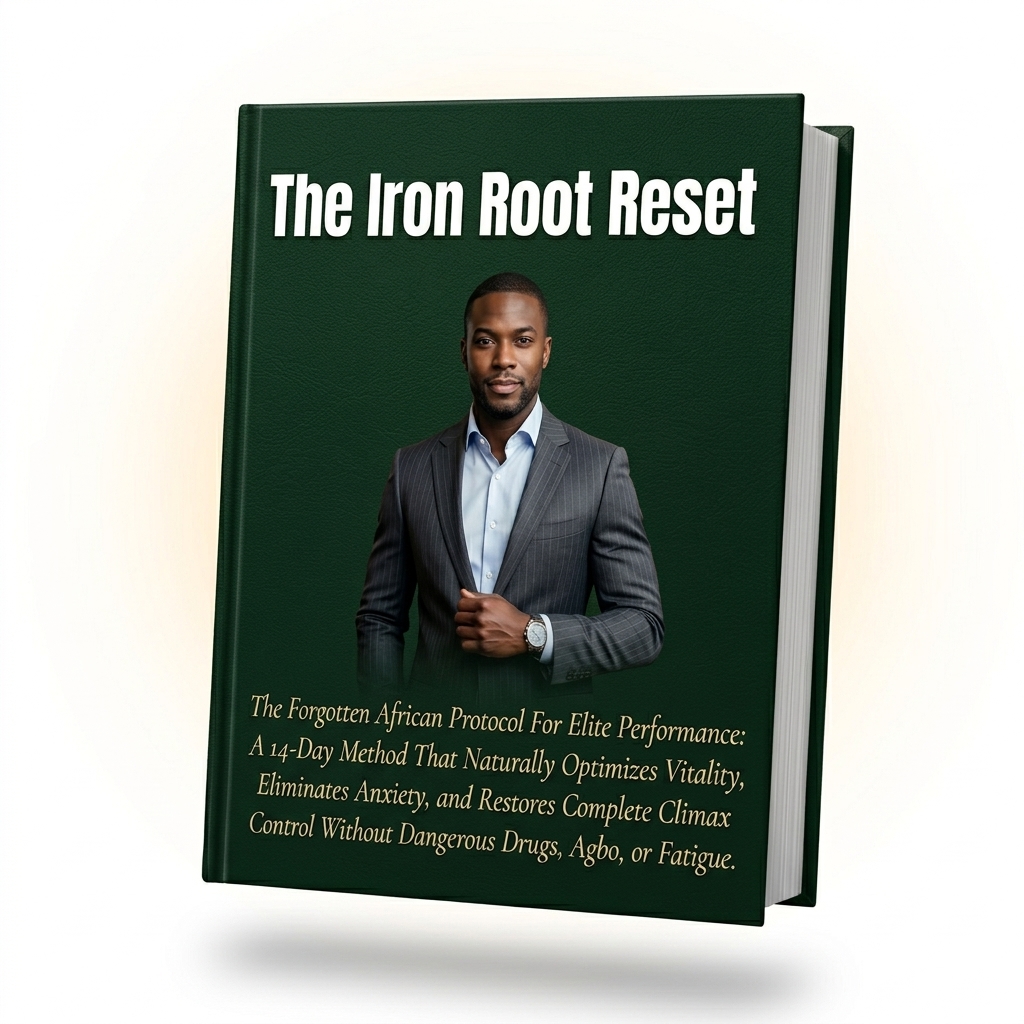
Here Is Exactly What Is Inside This Guide:
- PHASE 1 · Days 1–3 The real reason your body finishes too quickly, and why every pill and mixture you tried was attacking the wrong thing. A plain-English explanation of the pelvic floor, the anxiety loop, and the hypersensitivity factor, the three root causes most Nigerian men never hear about. — Pg. 5
- PHASE 1 · Day 1 The Kegel Identification Exercise : A 5-minute private practice that lets you locate and feel, for the very first time, the exact muscle that controls ejaculation. Once you feel it, you can train it. This alone changes everything. — Pg. 10
- PHASE 2 · Days 4–11 The full 5-Technique daily protocol : the Kegel Sequence, the Start-Stop Method, the Breathing Override, the Mental Anchor Technique, and the Nigerian Kitchen Nutritional Protocol, layered in progressively over 8 days so your body builds real control without overwhelm. — Pg. 13
- PHASE 2 · Day 6 The 4–2–6 Breathing Override: the exact inhale-hold-exhale pattern that switches off your body's emergency mode mid-action, giving you conscious control without stopping, without any visible movement change, and without your partner noticing a thing. — Pg. 19
- PHASE 3 · Days 12–14 The permanent maintenance routine : exactly what to do after Day 14 to lock in your results forever, including how to handle new partners, long gaps between encounters, and high-stress periods when the anxiety loop can try to restart. — Pg. 24
- TOOL The Nigerian Kitchen Nutrition Guide: a complete food table showing which everyday Nigerian market foods (egusi, ugu, tiger nuts, groundnuts, periwinkle, ginger, garlic, and more) directly support physical control, hormonal health and nervous system function, with exactly how to eat each one. No imports. No supplements. — Pg. 31
- TOOL The Partner Situation Scripts: word-for-word language for four real situations: when she mentions it directly, when she asks if something is wrong, when you want to be honest with her, and when she has already begun to pull away emotionally. These protect your dignity and your relationship at the same time. — Pg. 37
And the best part? You do not need to visit any clinic, buy any drug, order anything from Instagram, or tell a single person what you are doing. It is the same complete protocol that worked for me, and has now quietly worked for over 200 men across Nigeria who followed it exactly as written.
Real Men. Real Results.
Individual experiences vary. Results depend on consistency and effort.
What Went Into Building This Guide
This was not something typed in a weekend and uploaded. Real time and resources went into making sure every technique is clearly explained and genuinely usable:
- Professional health writer to structure all three phases in clear, readable language
- Research and documentation of the physiological mechanisms behind every technique
- Editor and proofreader to review all content for accuracy and readability
- Graphic designer for the guide layout, tables, and ebook design
- Website hosting and secure digital delivery infrastructure
Given everything inside this guide and the results men have experienced, a fair price would be significantly higher. But I want this accessible to as many men as possible — so I have kept it at a price that removes any reason to hesitate.
⚡ WAIT. I Have a FREE Gift For You...
Order today and you will receive these two powerful bonuses alongside your guide — completely FREE.
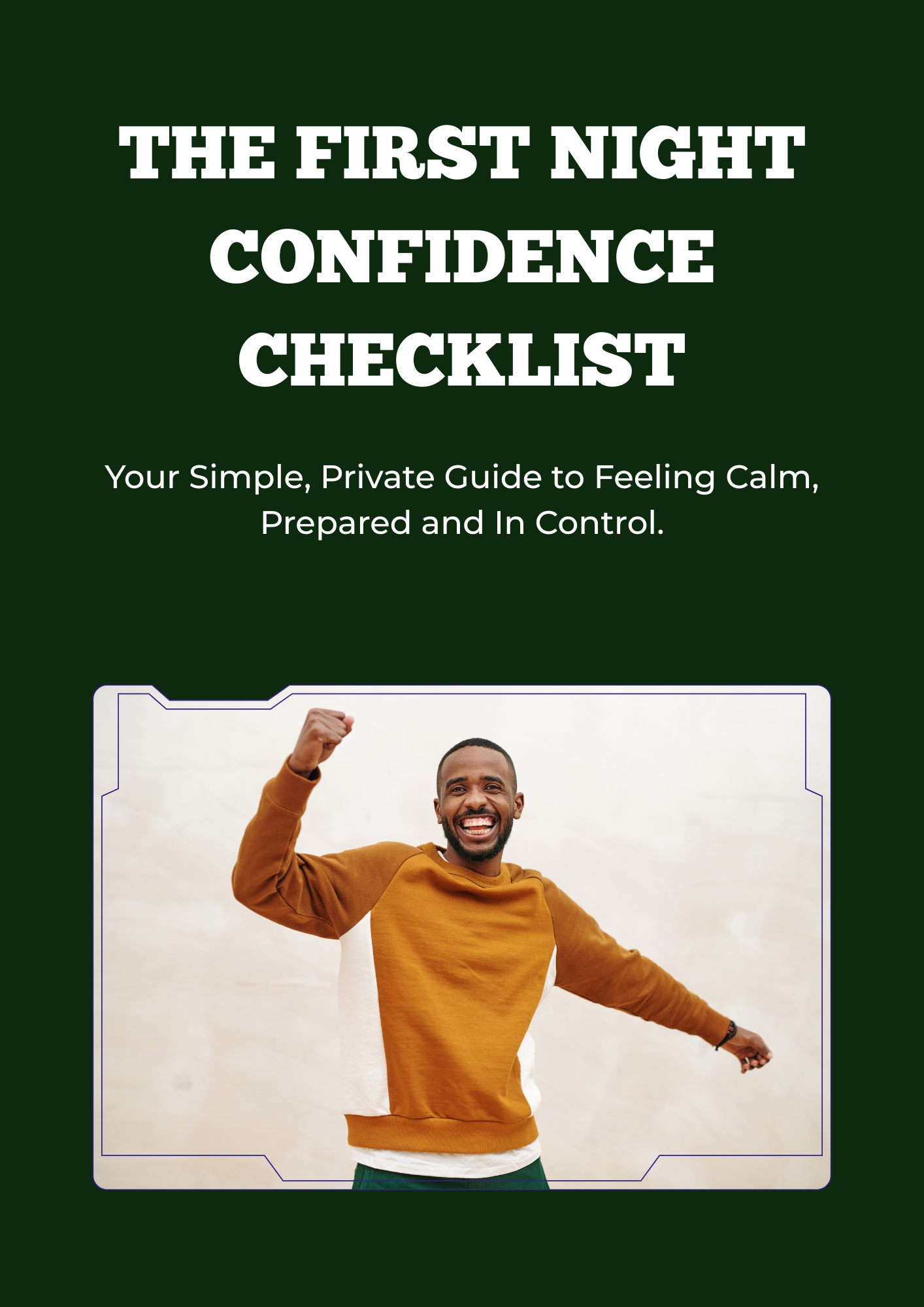
The First Night Confidence Checklist
A simple, private checklist that walks you through exactly what to do — and what to avoid, on the specific day or night you want to perform at your absolute best. Drawn directly from the Phase 2 techniques and the Nigerian Kitchen Nutrition Guide, distilled into one quick reference you can use anytime. No guesswork. No anxiety. Just clarity.
Value: ₦3,500 — Yours FREE
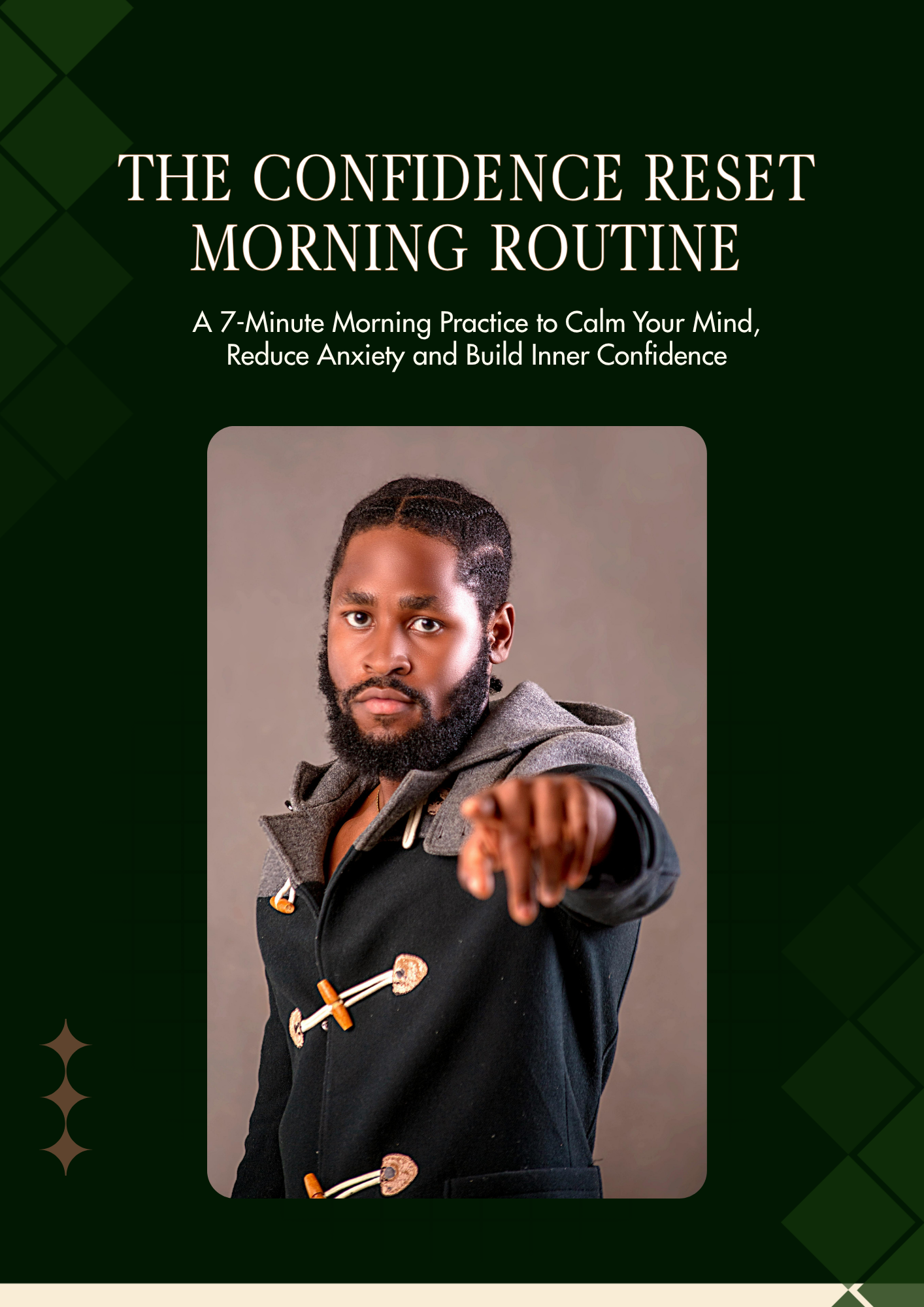
The Confidence Reset Morning Routine
A 7-minute morning practice, no equipment, completely private, designed to reduce background anxiety and low-level nervous tension. Works directly alongside the Mental Anchor Technique to accelerate your results from Week 1.
Value: ₦2,500 — Yours FREE
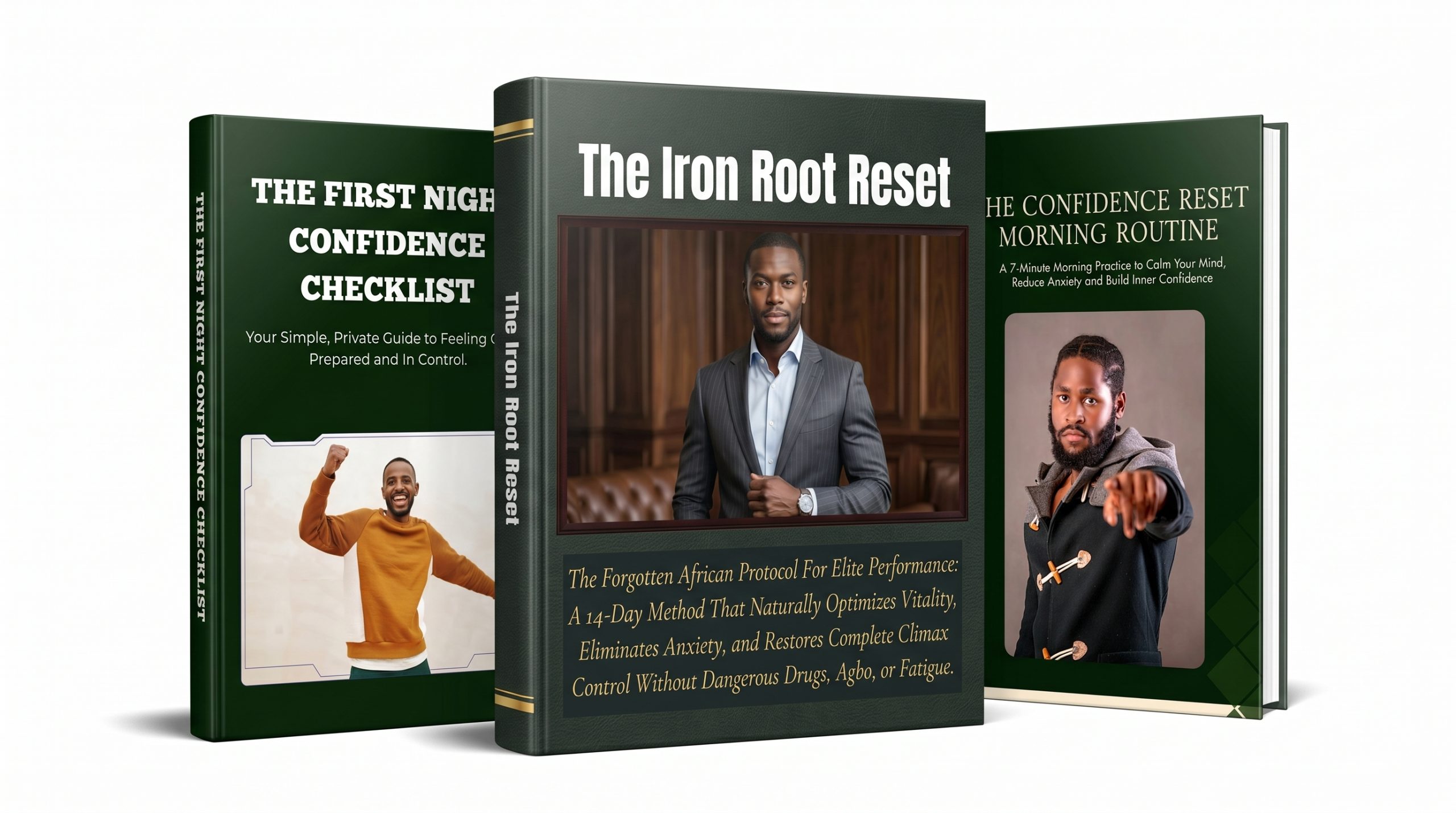
Total Value: ₦21,000 — Your Price Today: ₦9,800 Only
Still Unsure? Let Me Carry All the Risk For You.
I understand completely. You have bought things before that made promises they could not keep. The last thing you want is to feel deceived again.
Which is why I am making you a bold, risk-free promise:
Follow The Iron Root Reset for a full 30 days. Complete the three phases exactly as written. If you do not notice a real, meaningful improvement in your control, contact me directly and I will refund every naira you paid. No arguments. No questions. No delay.
You either get real results, or you get your money back. I am that confident, because I have seen what this protocol does when a man follows it properly.
More Men. More Results.
Individual experiences vary. Results depend on consistency and effort.
💬 Share your experience with us
So — What Are You Going to Do?
You have read everything. You know what is inside the guide. You know it is backed by a full 30-day money-back guarantee. You know it has already worked for over 200 men across Nigeria who followed it exactly as written.
Now there are only two choices in front of you:
Questions? Contact: coreedgepremium@gmail.com
© 2026 Core Edge Premium · All Rights Reserved
💬 Share your experience with us